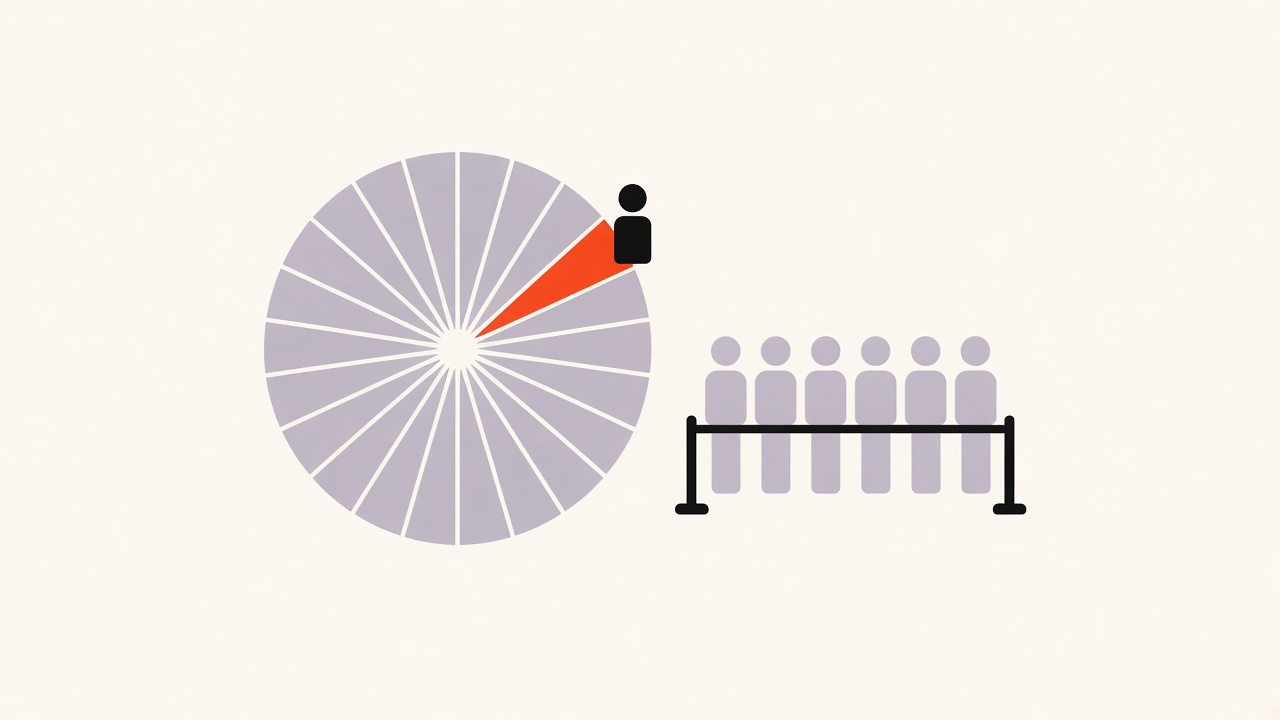
A billion-dollar beauty brand planned 40% off a skincare product for Black Friday. Its pricing software advised 30% instead.
That story comes from James Sun, chief executive of the AI pricing firm Kapnova, in a Reuters report published November 23. He did not name the client. He did not need to. Reuters interviewed five firms that sell AI pricing tools, and the pattern they described was the same: their models often conclude that brands can discount less without dampening demand.
Most marketers will read that as a pricing story, or a consumer story about stingier deals. It is a media story. The offer is the single biggest lever in a Black Friday ad, and the people who decide it are increasingly running software that does not know what your media plan is doing. This week, those two plans meet in the same checkout.
What the pricing firms actually said
Strip the Reuters piece down to what was on the record. Prashant Agrawal, chief executive of Impact Analytics, which counts Gap as a client, said his software “generally shows you need fewer promos for less time on less products.” A Gap spokesperson confirmed the brand uses it for markdown decisions “based on demand and inventory signals.” Greg Petro, founder of First Insight, said his tools recently told one brand to scale a buy one get one offer back from 50% off to 40% off. Lindsay Fisher, co-founder of Sparkbox, which works with New Balance, gave the line that stuck: while a human manager might be tempted to slash prices, the software “has the confidence to hold its nerve” when a smaller discount will do.
Then the line that should bother anyone who buys media. Ryan Orabone, a consultant at Spaulding Ridge who has built one of these tools, said that if it is done well, “consumers won’t realize it’s happening.”
Consumers might not. Your conversion rate will.
Reuters also listed what these models chew on: sales data, inventory levels, competitors’ prices, weather and economic conditions. That is the vendors’ description, not a spec sheet, and some tools may take in more. But notice what is not on the list. Ad spend. Flighting. The fact that your agency just put more money behind the exact products the model is deciding to discount less.
The demand the model sees is partly demand you bought
Here is the part I think most teams have not wired together. On the same day as the Reuters story, five media buyers told Digiday that brands will spend 10% to 30% more on digital media over Black Friday and Cyber Monday than last year, with most of the increase going to retail media, search, connected TV and YouTube. Tinuiti’s Michelle Merklin said her clients would spend 11% to 15% more with Google than last year.
Now run the loop. Media spend goes up. Traffic and demand hold or rise. A pricing model watching sales and inventory sees demand holding at a shallower discount and concludes, reasonably, that the deeper discount was never needed. Margin goes up. The pricing team gets the credit.
Some of that is real. Plenty of discounts are too deep, and a model that stops a panicked markdown is doing its job. But if the model cannot see that demand was propped up by a bigger media budget, it is reading paid demand as natural demand. In that case marketing is funding the margin improvement and then being judged on a ROAS figure that the shallower offer just made harder to hit.
That is my read, not something the pricing firms said. It is also testable, and the test is cheap. I will get to it.
The aggregate numbers do not say discounts are shrinking
Before anyone rewrites their whole plan, be careful with the headline. The market data does not show Black Friday getting stingier across the board.
Salesforce said on November 19 that discount rates in November were up 8% in the U.S. from a year earlier, and up 5% globally, with average selling prices for physical goods down 1% in the U.S. Adobe’s September forecast expected Cyber Week discounts to peak at up to 30% off listed price, roughly on par with 2025 category by category: electronics 30% against 30.1% last year, apparel 23% against 23.2%.
So the picture is not “less discounting.” It is a different shape of discounting. Reuters cited Centric Market Intelligence data showing that in sportswear, the share of products on discount went up over the past year while the average discount came down. The average sports bra on sale was 32% off, against 36% the year before. Wayvia data in the Digiday piece showed the number of products listed at a discount from October 1 to 20 up 56%, with the surge arriving weeks earlier than in 2025.
More products, earlier, at a smaller cut each. And the hero discount, the one number that headlines the ad, the email subject line and the affiliate post, is exactly the one a margin model is built to shave.

Breadth looks like it is winning, for now
There is a reason brands are going wide rather than deep. PMG data quoted by Digiday found that during October, brands with 75% of their product range on discount grew overall revenue 16% on average, while brands that discounted 25% or less of their products saw revenue fall 11%.
That is a correlation from one agency’s client base during one sale event, not proof that breadth causes growth. Brands with more stock to clear may simply discount more. But it lines up with what the pricing firms describe: spread a moderate discount across a lot of the range instead of one big number on a few heroes.
That changes what a Black Friday ad has to do. A 40% hero offer sells itself in a six second bumper. “Most of the range, 20% to 30% off” does not. If the depth is gone, the creative has to carry more of the sale: the product, the reason to buy now, the gift angle, the delivery date, the returns policy. Those are marketing jobs, and they are much harder to do when the offer changes the night before the creative goes live.
Shoppers now have price history in their pocket
There is one more reason a trimmed discount matters more this year than it used to. The people on the other end are checking.
Amazon, defending its deal pricing on November 16 against a Groundwork Collaborative study, said its AI shopping assistant, Alexa for Shopping, shows up to 365 days of price history, and that tens of millions of customers have checked price history and set price alerts. The study claimed 29.1% of 351 Amazon promoted holiday deals in 2024 and 2025 cost the same or more than their lowest price in the prior 30 days. Amazon called the findings false and said 98% of the products were priced the same or lower. I am not going to referee that fight. The point for marketers is what both sides take for granted: the shopper can see the price history now, often without leaving the app.
Digiday also cited a DHL commissioned survey of 29,000 consumers in which 90% said they used generative AI chatbots or assistants to compare prices. Salesforce said price comparison is the top use for personal shopping agents. Put that together and a shallow discount dressed up as a big one gets found out faster, in an answer box, before the shopper ever sees your landing page.
None of this means deep discounts are back. It means the old trick of a loud percentage on a soft price has a shorter life, and the honest shallow offer needs better reasons to buy around it.

Where bidding gets caught out
There is a mechanical problem too. Smart bidding systems learn from conversion rates, and Black Friday conversion rates are partly a function of the offer.
Google’s own help page on seasonality adjustments describes the tool as a way to tell Smart Bidding about “expected changes in conversion rates for future events like promotions or sales,” best used for short events of one to seven days. If your team plans that adjustment off last year’s lift, when the hero offer was deeper, and the pricing model has since trimmed it, you are telling the bidder to expect a conversion spike the offer may no longer produce. The bidder then pushes harder into auctions that the shallower deal cannot convert at the rate you promised it.
The same goes for any ROAS target or budget pacing rule built from a 2025 baseline. Last year’s Black Friday was a different offer. Treat it as a different event.
What to do this week
Black Friday is Friday. Most of what you can still change is coordination, not strategy.
Get the final discount table today. Ask pricing or merchandising for the final Black Friday and Cyber Monday discount by product or category, in writing, with a time after which it will not change. Then check every live asset against it: ad copy, feed promotions, email subject lines, affiliate briefs, creator scripts. Kill any “up to 40%” line that was written off a plan the model has since trimmed.
Ask one question about the model. Does the pricing tool see media spend or flighting as an input? If the answer is no or nobody knows, send merchandising your Black Friday and Cyber Monday media plan by product line, so they at least know which demand is paid. This is a one email job.
Re-base your bidding assumptions. If you use seasonality adjustments or event-specific ROAS targets, size them from this year’s offer depth, not last year’s lift. Where the hero discount has been cut, be more conservative on the expected conversion rate change, not less.
Rewrite the creative where the depth disappeared. For products whose discount was trimmed, lead with something other than the percentage: the range, the gift angle, the delivery cut-off, the returns window. Keep the big number for the products where it survived.
Measure margin, not just ROAS. Report contribution margin per order and new customer rate alongside ROAS for the Black Friday window, split by products where the discount was trimmed and products where it held. That split is the cheap test I promised. If trimmed products held volume only where media rose, you have your evidence that the model was reading paid demand.
Book the post-mortem now. Put a pricing and media review on the calendar for the week after Cyber Monday, with both teams’ numbers in one table. For January sales and next year’s Prime events, the goal is simple: the model that sets the offer and the plan that buys the demand should at least know about each other.
The pricing software is going to keep holding its nerve. That is fine. Just make sure it is not holding it with your media budget.