Most marketers spent this week thinking about Black Friday sends. On Thursday the company that sends a lot of them agreed to be sold.
On November 19, Bending Spoons agreed to buy Mailchimp from Intuit at an enterprise value of $3.68 billion. Intuit’s own release splits that into $3.31 billion in cash and $368 million in Bending Spoons stock. Both companies expect the deal to close in early 2027, subject to regulatory approval. As CNBC and TechCrunch both pointed out, Intuit paid about $12 billion for it in 2021. It is selling for less than a third of that.
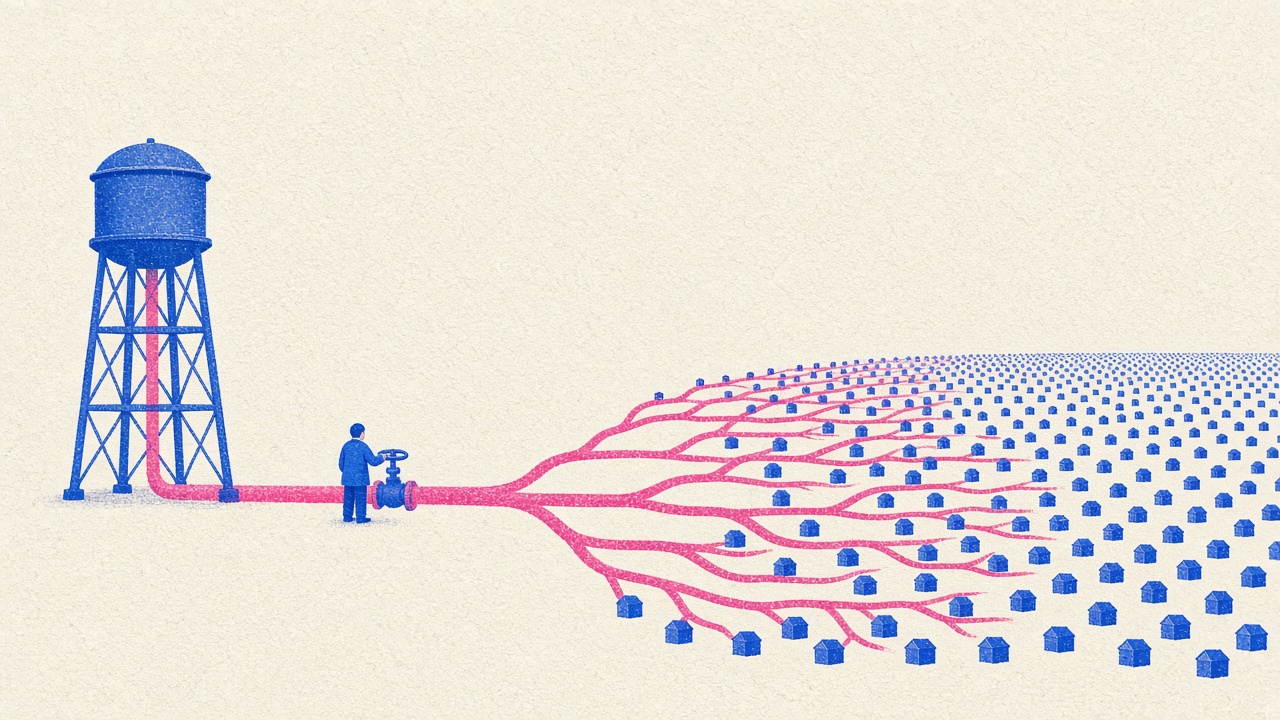
Most of the coverage is about that loss. The part that matters to anyone with a list in Mailchimp is the buyer. Bending Spoons is not a strategic acquirer looking for synergy slides. It buys established software, rebuilds it with a much smaller team and reprices it, and it says so in writing. If your owned channel runs on Mailchimp, the building your audience lives in is getting a new landlord, and this one has a public record on rent.
Nothing changes this month. That is the point. You have a window, and the window is the asset.
What the buyer says it will do
You don’t have to guess at the playbook. The “About” paragraph in the deal release describes it: Bending Spoons acquires digital businesses and “implements deep transformations.” The transformation, it says, “is typically deep and entails reorganizing teams, overhauling technology, redesigning user interfaces, accelerating product development, and enhancing marketing and monetization.”
The company’s Q3 2026 prepared remarks, prepared for its November 20 earnings call, are just as direct about Mailchimp. Mailchimp brought in $1.27 billion in revenue in the twelve months to October 31. Bending Spoons sees “opportunities to improve the technology, product, and monetization through our Platform” and says it is “attracted by the business’s scale and revenue predictability.”
Read that last phrase as a marketer. Revenue predictability in email software means customers who don’t leave easily. Lists are sticky. Automations take years to build. Signup forms sit in a hundred places on your site, and nobody remembers where all of them are. That stickiness is exactly what the buyer is paying for.
It also matters what kind of business is changing hands. Intuit reported Mailchimp revenue down 1% to $313 million for the quarter, and it guides fiscal 2027 Mailchimp revenue at flat to down 1%. CNBC reports that in August, Intuit’s finance chief said the company expected Mailchimp’s “higher effective prices” to offset rising customer churn. So the squeeze did not start with the new owner. Intuit already cut the Free plan on February 17, 2026, from 500 contacts and 1,000 sends a month to 250 and 500, according to the customer notice and Mailchimp’s own pricing help page. A flat product holding revenue by charging more per customer is the exact shape of business Bending Spoons likes to buy.
What happened at the last few buildings it bought
The record is long enough now to look at plainly.
At WeTransfer, Bending Spoons confirmed to TechCrunch in 2024 that it planned to lay off 75% of staff. Follow the Money found the same pattern across the portfolio: cuts first, then higher prices and big product changes.
At Vimeo, the company replaced every old plan in 2026. Vimeo’s help centre lists the new lineup, ending in a Studio plan at $400 a month, billed annually, for “accounts identified for business use.” PetaPixel reported in September that some customers on the $75 a month Advanced plan were moved to Studio at Vimeo’s discretion, which takes a $900 annual bill to $4,800. The customer did not choose the business classification. Vimeo did.
At Harvest, the time tracking tool, flat per-seat pricing became plans with usage charges on active projects, clients, tasks and invoiced revenue. The BBC talked to a UK consultancy whose monthly bill went from $130 to $2,110, and reported one US customer whose annual charge went from $2,800 to $23,000. Harvest told the BBC the biggest jumps hit legacy plans, some dating back to 2011.
The CEO doesn’t hide the logic. “I agree that we often increase prices for users who use an application most frequently,” Luca Ferrari told Follow the Money, adding that “we almost every time greatly increased the value for free users.”
To be fair, the pattern is not uniform. Vimeo made public video storage free and unlimited while it raised the top of the range. A roundup by Sulat, which tabulated every deal, found Airtable’s prices and Eventbrite’s ticket fees unchanged so far. Some of these products got faster and better. Ferrari’s release promises to “invest substantially” in Mailchimp, and nobody has announced a single Mailchimp price. Anyone telling you the exact increase is making it up.
But the shape is clear enough to plan around. Prices tend to move after the deal closes, they move most for the heaviest users and the oldest plans, and they often arrive as a new plan structure rather than a simple rate rise.

Why heavy users in email are the ones with the most dead weight
Here is where it gets specific to email, and where most of the “what to do” lists stop short.
Mailchimp bills by contact count. Its pricing help page says plainly that “subscribed, unsubscribed, and non-subscribed contacts are included in your contact count.” Archived, cleaned and deleted contacts are not. If your list has grown for a decade, a large share of what you pay for may be people who left years ago or never opened a single email.
So in Mailchimp, “heaviest user” doesn’t only mean the brand sending the most email. It means the account with the most contacts on the books, live or not. If the next owner follows the Vimeo or Harvest pattern and reworks plans around how much of the product you use, an account carrying, say, 200,000 contacts of whom 60,000 actually engage is the one with the worst bill and the weakest case for paying it.
Three groups should read this as their problem, not someone else’s.
Agencies. If you run Mailchimp for clients, you hold many accounts, often on old plans set up years ago. That is the Harvest profile. Your clients will hear about the sale this week. They should hear what it means from you first.
Brands on legacy terms. Anyone on a plan old enough that nobody on the current team set it up. In past deals, the biggest moves hit the oldest plans.
Teams whose revenue runs through automations. Welcome series, abandoned cart, post purchase, win back. When a platform reorganizes its teams and rebuilds its technology, those flows are what can break quietly. Nobody notices a welcome series that stopped sending until the monthly report.
The notice period is shorter than your migration
This is the part I’d underline for anyone who owns the email budget.
When prices change in this portfolio, notice tends to be about a month. Vimeo’s help centre says it will email “one month before your plan changes.” Harvest told the BBC customers get an email 30 days ahead, then another 10 days before renewal.
Thirty days is plenty to move files out of a file sharing app. It is not enough to move an email program properly. Leaving an email platform means authenticating your sending domain somewhere new, rebuilding every automation and its logic, reconnecting your store, CRM and every signup form, moving suppression lists without losing a single unsubscribe, and then sending carefully while inbox providers learn to trust the new setup. Rush that and the damage shows up as lost inbox placement and lost revenue, not as a line in a software budget.
So the real risk isn’t the next price. It’s being handed a price on someone else’s calendar, with thirty days to decide, in a quarter where you are also planning spring campaigns. The fix is to make the decision now, on your calendar, while the deal hasn’t closed and nothing has changed.
And to be clear about timing: do not move anything during Black Friday, Cyber Monday or the holiday sends. Changing sending infrastructure in your highest volume weeks is how a pricing worry turns into a deliverability incident. The work for the next six weeks is getting ready. Any actual move belongs in the quiet weeks after the holidays.
Owned audience, rented building
There is a bigger point under this deal.
For two years the advice to marketers has been the same: AI answers are eating clicks, so build owned channels. eMarketer was making that case again on November 20, reporting that Google’s AI search is leaving advertisers paying more for less predictable reach. Email is the channel everyone points to as the hedge, because you own the list.
You do own the list. You don’t own the building it lives in. The sending platform, the automation logic, the templates, the form code and the reporting history are all rented. Until this week, plenty of teams treated their email platform as a utility that would quietly stay the same. Mailchimp’s sale is a reminder that the rent on your owned channel is set by whoever owns the software, and owners change.
That doesn’t mean everyone should leave Mailchimp. For a lot of small businesses it will still be the easiest tool around, and a well run Bending Spoons version could even be a better product. It means you should treat your email platform like a lease. Know what is in it, what it costs, what it would cost to leave, and the number at which you would.

What to do before the holidays and the closing date
None of this needs a meeting. Most of it is a few hours of work, and the first two items save money even if nothing ever changes.
Export everything while it’s routine. Audiences with all fields and tags, the suppression list, campaign reports and automation reporting. Do it now, while it’s a boring admin task and not an emergency.
Archive the dead weight. Since unsubscribed contacts count toward your bill, archiving people who unsubscribed or haven’t engaged in a long time can drop you a pricing tier today. One caution from Mailchimp’s own help page: archiving is not deletion. If an EU contact asks to be erased, you still have to delete them permanently.
Write down what you pay and on what terms. Screenshot your plan, contact tier and monthly price, with the date. Find the terms that cover how price changes take effect. If you are on a sales contract, ask for a renewal cap in writing before the deal closes, when the people across the table still work for Intuit.
Map what depends on Mailchimp. Every signup form, every store and CRM connection, every automation and what it earns, every transactional email. This is the document that turns a future thirty day notice from a panic into a choice.
Set your walk away number now. Decide what increase, or what kind of plan restructure, would make you leave. Write it down while you are calm and nobody has sent you a new price.
Pilot one alternative in January, on a small segment. Not during the holidays. Pick one other platform, run a real program on a slice of the list, and learn what moving actually involves. If Mailchimp’s new pricing turns out fine, you have lost nothing. If it doesn’t, you already know the way out.
Agencies, send your clients a note. One paragraph: what was announced, that nothing changes before closing, what you are already doing for them, and the date you’ll check back. That’s the difference between looking like an adviser and looking like a vendor.
The landlord is changing in early 2027. The lease you can negotiate is the one you write for yourself this month.